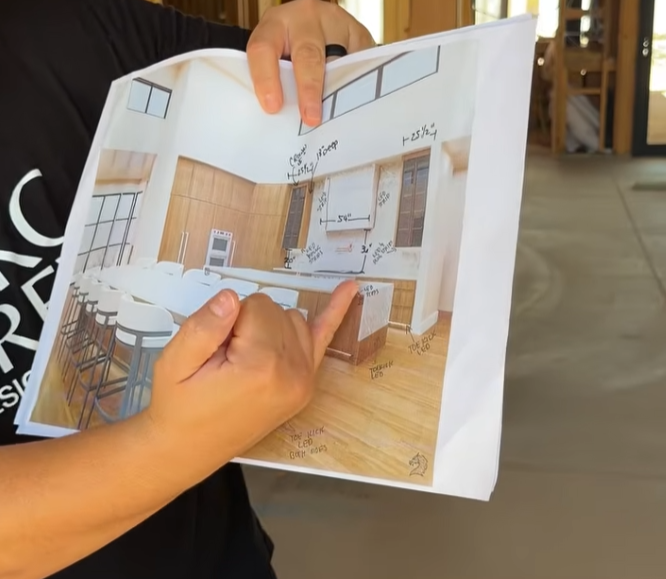
What Does a Kitchen Remodel Really Cost?
A full kitchen renovation in Scottsdale and Phoenix usually runs $100,000 to $200,000. Here is what drives the cost and where budgets surprise homeowners.
Video: Karla Lucero, KC KREW. This article is adapted from Karla's video above.
Read the video transcript
People ask me all the time: "Karla, what is a realistic budget for my kitchen remodel?" I wish I could give a neat number and move on. I can't. A kitchen remodel is not a package deal. The cost is driven by the size of the kitchen, the layout, the finishes, and whether we are moving walls, plumbing, gas, or electrical.
That said, if we are talking about a full renovation in the Scottsdale and Phoenix area, you probably want to budget between $100,000 and $200,000. The lower end covers a straightforward kitchen with quality but not luxury finishes. The upper end covers larger spaces, custom cabinetry, built-in appliances, layout changes, and higher-end materials.
A realistic starting point for a full renovation
When I say "full renovation," I mean we are pulling the kitchen down to the studs and rebuilding it. New cabinets, new countertops, new backsplash, new flooring, new lighting, new plumbing fixtures, and usually new appliances. If the layout stays mostly the same and we are using semi-custom cabinets and mid-range finishes, a smaller kitchen might land closer to $100,000.
As the space gets bigger, or as we start moving plumbing, gas, or electrical, the number climbs. A large kitchen with custom cabinets, a paneled refrigerator, a professional range, and natural stone counters can push toward $200,000 or beyond without much effort.
What counts as a full renovation
A full renovation means more than new counters and a coat of paint. It usually includes:
- Removing the existing cabinets, counters, backsplash, flooring, and fixtures
- Repairing or updating drywall, plumbing, electrical, and HVAC as needed
- Installing new cabinets, counters, backsplash, flooring, lighting, and plumbing fixtures
- Replacing or relocating appliances
- Pulling permits and passing inspections
- Final paint, hardware, trim, and cleanup
If we are also changing the footprint, knocking down walls, or relocating the sink or range, that is a different level of work and a different price tag.
The four things that move the number
There are four main drivers that decide whether a kitchen remodel lands at the low end, the high end, or past it.
Layout changes. Keeping the sink, range, and refrigerator where they are saves money. Moving them means new plumbing, gas, electrical, and sometimes structural work. That is where costs jump quickly.
Cabinetry. Stock cabinets cost the least. Semi-custom cabinets give you more choices in size, finish, and organization. Fully custom cabinets are the most expensive and take the longest, but they fit the space exactly.
Appliances. A standard appliance package is one price. Built-in refrigerators, column freezers, professional ranges, and paneled dishwashers are another. Appliances can eat up 15% to 25% of the total budget on a high-end kitchen.
Finishes. Quartz is generally more predictable than natural stone. Tile backsplashes range from simple subway layouts to intricate mosaics. Hardware, lighting, and plumbing fixtures add up fast because there are dozens of decisions in a small space.
Cosmetic updates vs. gut renovations
Not every kitchen needs a full renovation. If the cabinets are in good shape, the layout works, and the appliances are staying, a cosmetic update can make a big difference for less money.
A typical cosmetic update might include painting or refacing cabinets, replacing counters and backsplash, updating the sink and faucet, adding new lighting, and swapping out hardware. In our market, that kind of project often falls in the $30,000 to $60,000 range, depending on the size and material choices.
That is a very different conversation than a gut renovation, and it is important to know which one you are actually planning before you start comparing numbers.
Where the budget usually surprises people
Most homeowners have a general idea what cabinets and counters cost. The surprises usually hide in the parts they do not see.
Demolition and disposal. Tearing out an old kitchen and hauling it away costs more than people expect, especially if there is tile, concrete, or old built-ins.
Plumbing and electrical upgrades. Older homes often need new water lines, drain lines, electrical circuits, or panel work to handle modern appliances and lighting.
Permits and inspections. Scottsdale and Phoenix both require permits for most kitchen work. Permit fees, plan review, and inspection scheduling add time and money.
Protection and logistics. If you are living in the house during the remodel, we need to control dust, protect floors, and sometimes set up a temporary kitchen. That takes labor and materials.
Changes along the way. The fastest way to blow a budget is to change finishes or scope after work has started. Every change has a ripple effect.
How to get a number you can actually use
The only way to get a reliable budget is to define the scope first. That means deciding what stays, what goes, what moves, and what finishes you want. From there, a builder can give you a real number with allowances broken out so you can see where the money is going.
I always tell people to keep a contingency, too. Even with good plans, you will find something behind the walls or under the floor that no one expected. A 10% contingency is a smart buffer on most kitchen projects.
If you are planning a kitchen remodel in Scottsdale or Phoenix and want an honest opinion on what your scope might cost, schedule a consultation. We will walk through your space, talk about what matters to you, and give you a realistic budget before anything is signed.
Still Have Questions?
We're builders, but we're educators first.
If you're planning a project and need guidance, we'd be happy to talk through your ideas and help you understand your options.