
What Happens If You Do Work Without a Permit in Arizona
A stop work order, an after-the-fact permit, an investigation fee, and opening up finished work so an inspector can see it. Here is how that plays out in Scottsdale, Paradise Valley, Phoenix, and unincorporated Maricopa County.
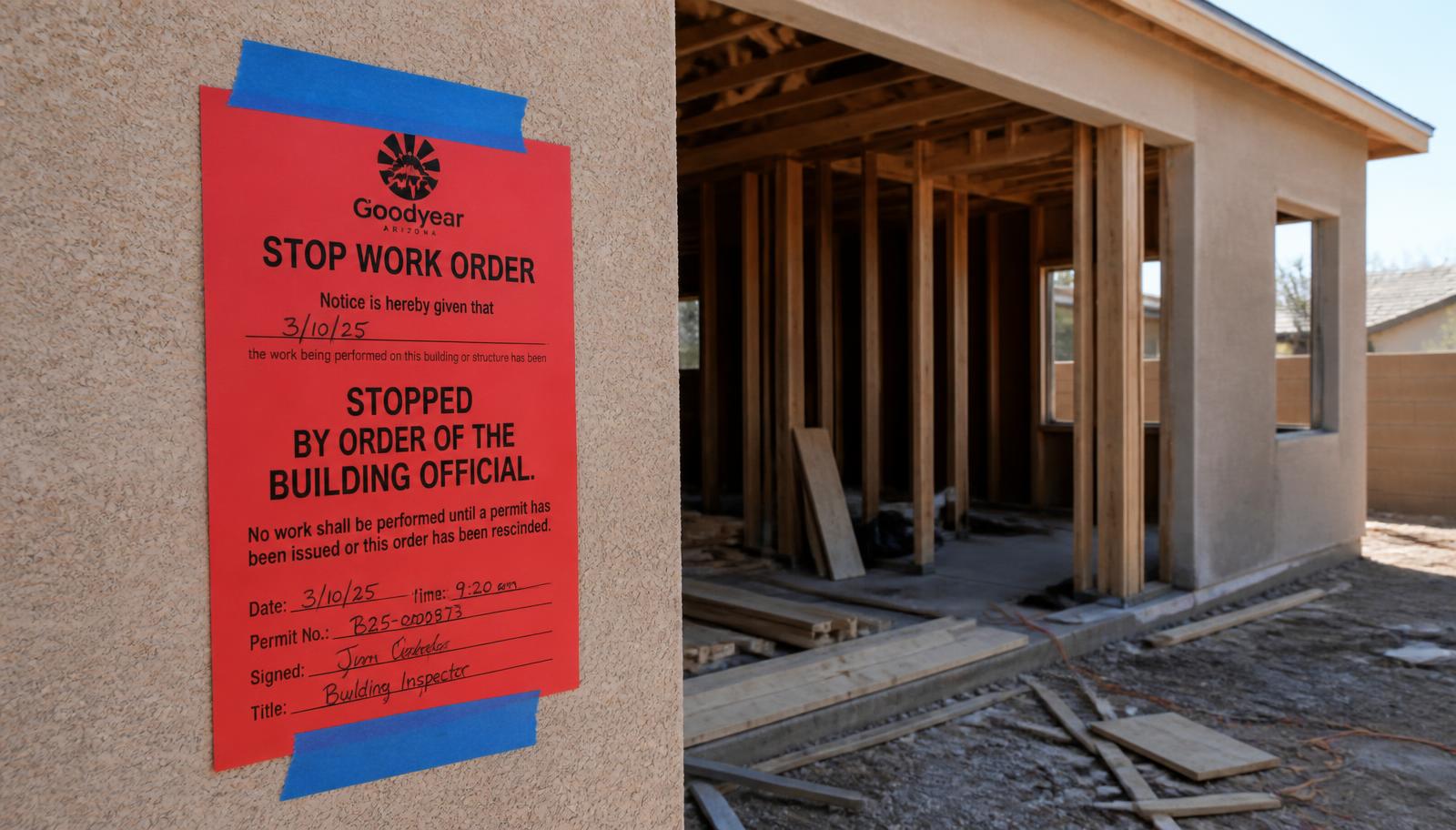
Homeowners ask us this after the fact more often than before. Someone got a good price from a handyman, the work is already done, and now there is a letter from the city or a buyer's inspector asking questions. So here is the honest version of what happens, and how it differs depending on which jurisdiction your house sits in.
The short answer
Unpermitted work does not stay quiet forever. When a jurisdiction finds it, the sequence is nearly always the same:
- A stop work order posts on the property and the work stops.
- You apply for a permit after the fact for work that is already built.
- You pay an investigation fee on top of the normal permit fee.
- You open up the finished work so an inspector can see what is behind the drywall.
- Anything that does not meet code gets corrected, at your cost.
- If the work was never permittable, for example it sits in a setback or an easement, you remove it.
Nobody shows up at your door with handcuffs. What actually hurts is step four and step six. Drywall, tile, stucco, and paint all come off so an inspector can look at framing, wiring, and plumbing that nobody watched go in.
What actually requires a permit
The line is not about how expensive the work is. It is about whether the work affects structure, safety systems, or the building envelope. In every Valley jurisdiction you should expect to pull a permit for:
- Additions, casitas, and any new square footage
- Garage and carport conversions to living space
- Removing or altering a load-bearing wall
- New or relocated electrical circuits, panel changes, and service upgrades
- New or relocated plumbing, including anything cut into a slab
- Water heater replacement and gas line work
- HVAC changeouts and new ductwork
- Reroofing
- Windows and doors when the opening size changes
- Pools, spas, and pool barriers
- Block walls and retaining walls above a set height
- Detached structures above a small size threshold
You generally do not need a permit for paint, flooring, cabinets that stay in the same footprint, countertops, trim, or swapping a fixture for a like fixture in the same location.
The trap is the middle ground. A kitchen remodel where nothing moves is often permit free. The same kitchen with the sink relocated eight feet is a plumbing permit. A bathroom refresh is cosmetic until you move the shower drain, at which point you are cutting a slab and inspectors care a great deal.
Jurisdiction by jurisdiction
Every city in the Valley works from a version of the International Residential Code, so the technical requirements look similar on paper. The differences are in the local amendments, the overlays, the review timelines, and how each one handles work that is already built.
City of Scottsdale
Scottsdale handles permitting through its One Stop Shop, and residential plan review is generally straightforward for a standard addition or remodel. What catches people is the overlays. A large share of the city sits under Environmentally Sensitive Lands regulations, and the historic districts and hillside areas have their own review layers. A project that would be routine in a flat central lot can require additional review on a north Scottsdale hillside parcel because of grading, disturbance limits, and native plant protection.
For unpermitted work, Scottsdale issues a stop work order and requires a permit obtained after the fact, with an investigation fee added to the standard fee. Expect to expose concealed work. Scottsdale also enforces HOA-independent zoning standards, so a casita or shed that a neighborhood approved can still be a zoning problem if it sits inside a setback.
Practical note for Scottsdale homeowners: if you are planning a renovation, the ESL and hillside questions should be answered before design gets far, not during plan review. That is one of the more common reasons a Scottsdale project loses a month.
Town of Paradise Valley
Paradise Valley is the strictest of the four, and it is also where we get the most calls about permits. The town runs its own building and planning department, so nothing routes through Maricopa County or Phoenix. Three things make it different:
Hillside review. Property on the slopes of Camelback or Mummy Mountain falls under the town's hillside regulations and goes before the Hillside Building Committee. That is a public review process with its own submittal calendar, and it is not something you can shortcut. Grading, driveway slope, building height measured off natural grade, and visibility from surrounding property all get examined.
Lot coverage and height measured strictly. The town's one acre minimum lot standard and its coverage limits mean an addition that seems modest can push a property over. Because height is measured from natural grade rather than finished grade, a pad that got built up during an earlier project can quietly eat your allowance.
Septic. Much of Paradise Valley is not on municipal sewer. That means an addition adding bedrooms can trigger a septic capacity review, and in some cases a new or enlarged system. Maricopa County Environmental Services handles the septic side even though the town handles the building permit. Homeowners who add a bedroom without a permit in PV frequently end up with a septic problem on top of the building problem, and septic is the expensive one.
Unpermitted work in Paradise Valley is treated seriously. The town is small, staff know the properties, and neighbor complaints in a low-density town with long sightlines are common. If you have unpermitted work in PV and you are planning to sell, deal with it before you list. See our Paradise Valley service area page for more on how the town's process works.
City of Phoenix
Phoenix runs the highest permit volume in the state and has the most options for moving quickly. It offers self-certification programs for qualified professionals and over the counter or express review for smaller residential work, which means a straightforward permit in Phoenix is often faster to obtain than in a smaller jurisdiction where a single plans examiner handles everything.
For unpermitted work, Phoenix Neighborhood Services handles code enforcement complaints, and the building department handles the permit correction. The process is the same shape: stop work, permit after the fact, investigation fee, inspection of concealed work.
Phoenix is also where we see the most unpermitted garage conversions and carport enclosures, particularly in older central neighborhoods. Those are worth flagging because a converted garage frequently fails on three counts at once: no permit, insufficient off-street parking under zoning, and no proper firewall separation between the converted space and the remaining garage. Fixing the permit does not fix the parking count. We wrote about doing this the right way on our carport conversion page.
Maricopa County (unincorporated areas)
If your property is unincorporated, meaning it is not inside any city or town, Maricopa County Planning and Development is your building department. This covers a lot of desert land at the edges of the metro and some pockets you would not expect.
Two differences matter. First, county permitting handles septic and well permitting through Environmental Services, so a new build or an addition adding fixtures involves a second agency. Second, unincorporated parcels are frequently larger and on well and septic, so unpermitted work out there tends to be detached structures, shops, barns, and casitas rather than interior remodels. Those still need permits, and county inspectors do drive.
Also worth knowing: annexation happens. Work built without a permit in county jurisdiction does not become legal when a city annexes the land. The new city inherits the property with the same unpermitted structure on it.
What it actually costs
The fee itself is the least of it. Most Valley jurisdictions charge an investigation fee that roughly doubles the permit cost, with a minimum in the low hundreds. Call the building department for your specific jurisdiction to get the current figure, since fee schedules change and we would rather you get the real number than our estimate.
The real costs stack up elsewhere:
- Demolition to expose the work. Drywall, tile, stucco, and finish work come off wherever an inspector needs to see framing, wiring, or plumbing. Then it goes back on.
- Engineering. If a wall was removed or a structure was built without stamped plans, you may need an engineer to evaluate and provide a letter, and sometimes to design a retrofit.
- Corrective work. Undersized wire, missing hangers, improper venting, no fire blocking, headers that were never sized. Each of these is a real repair.
- Removal. If the structure violates a setback, exceeds lot coverage, or sits over an easement, no amount of correction makes it legal. It comes down or you pursue a variance, which is a public process with no guaranteed outcome.
- Time. The delay usually lands during a sale or refinance, when it costs the most.
Selling a house with unpermitted work
Arizona's residential seller disclosure statement asks directly whether there have been additions or alterations made without required permits. Answering that dishonestly is not a paperwork problem, it is a liability that follows you past closing.
In practice, here is what happens at sale. The appraiser will not count unpermitted square footage toward value, so that 400 square foot bonus room does not appraise. The lender may object. The buyer's inspector flags it and the buyer uses it as leverage. Assessor records and permit history do not match what is standing on the lot, and any reasonably diligent agent will pull both.
You have two options and both cost money: permit it after the fact before listing, or disclose it and price accordingly. The first usually nets more.
How to fix it
If you already have unpermitted work, this is the order we walk clients through:
- Find out who has jurisdiction. City, town, or unincorporated county. This determines everything else.
- Pull the permit history for your parcel. Most jurisdictions provide this online. Compare it against what is physically on the property so you know the full scope before you call anyone.
- Check zoning before building code. Setbacks, lot coverage, height, easements. If the structure is not legally placeable, the building code questions do not matter yet.
- Get plans drawn of what exists. After-the-fact permits still need a submittal, and it has to reflect actual construction, not what was intended.
- Submit and expect the investigation fee. Be straightforward with the department. Cooperation genuinely changes how these go.
- Plan for exposure and correction. Budget for opening walls and for finding at least a few things that need repair.
Where we come in
We handle after-the-fact permitting as part of our renovations work, and we also do it as a standalone project when someone needs to clear a property before selling. A large part of what we do in pre-construction is exactly this research, checking permit history, zoning, and jurisdictional requirements before anyone commits to a scope.
If you inherited unpermitted work, or you are staring at a stop work order, call us at (480) 226-2978. We would rather help you sort it than watch you find out about it during escrow.
This article is general information about how permitting works in the Phoenix metro, not legal advice. Fee schedules, code adoptions, and local amendments change. Confirm current requirements with your jurisdiction's building department before acting.
Frequently asked questions
- What happens if you do work without a permit in Arizona?
- The building department issues a stop work order, and the work stops until the permit is resolved. From there you apply for what most Valley jurisdictions call an after-the-fact permit, pay an investigation fee on top of the normal permit fee, and open up the finished work so an inspector can see what is behind the drywall. If the work does not meet code, you correct it. If it cannot be corrected or was never permittable, the city can require you to remove it.
- How much is the penalty for unpermitted work in Arizona?
- Most Phoenix metro jurisdictions charge an investigation fee equal to the permit fee, so you effectively pay double, and several set a minimum in the low hundreds of dollars. That is the smallest cost. Demolition to expose concealed work, engineering letters, corrective construction, and the delay on your sale or refinance usually cost far more than the fee. Continued violations can be cited as misdemeanors, though cities rarely go there when an owner cooperates.
- Do permit requirements differ between Scottsdale, Paradise Valley, and Phoenix?
- The base code is similar because Valley jurisdictions all adopt versions of the International Residential Code, but the local amendments and review steps differ a lot. Paradise Valley adds hillside review and its own town process. Scottsdale has separate historic and environmentally sensitive lands overlays. Phoenix runs the highest volume and has the most self-certification and express options. Maricopa County handles unincorporated land and adds septic and well permitting through Environmental Services.
- Can I sell a house in Arizona with unpermitted work?
- You can list it, but Arizona's residential seller disclosure statement asks directly about additions or alterations made without required permits, and answering it dishonestly creates liability that outlives the sale. In practice unpermitted square footage does not appraise, lenders balk, and buyers use it to renegotiate. Most sellers either permit it after the fact or discount the price to account for it.
- What work actually needs a permit in Arizona?
- Anything structural, anything that adds or moves electrical, plumbing, gas, or mechanical, anything that changes the building envelope, and most additions, casitas, garage conversions, pools, spas, water heaters, panel changes, reroofs, and block walls above a set height. Paint, flooring, cabinets in the same footprint, countertops, trim, and simple fixture swaps generally do not.
- How long do I stay liable for unpermitted work?
- There is no point where an unpermitted addition becomes legal by age. Code enforcement is generally complaint driven, so plenty of old work sits undiscovered for decades, but the exposure resurfaces at sale, refinance, appraisal, insurance claim, or the next permit application on the property, because plan reviewers compare what is on file against what is on the lot.
- Will my insurance cover damage from unpermitted work?
- Coverage disputes are common. Carriers can contest a claim when the loss traces back to work that was never inspected, and unpermitted square footage may not be reflected in your dwelling coverage at all. Ask your carrier before you assume the addition is covered.
- Can unpermitted work be permitted after the fact?
- Usually yes. You submit plans of what exists, pay the permit plus investigation fee, expose the concealed work for inspection, and correct anything that fails. It gets harder when the work violates something you cannot fix with a repair, such as a setback encroachment, lot coverage over the limit, or a structure in an easement. Those need a variance or removal.
Still Have Questions?
We're builders, but we're educators first.
If you're planning a project and need guidance, we'd be happy to talk through your ideas and help you understand your options.